Dan Gold Collection

Overview

Daniel R. Gold, DOThe Daniel R. Gold Neuro-Ophthalmology Clinical Collection consists of videos relating to the diagnosis and treatment of eye movement disorders; created by Daniel Gold, DO, of Johns Hopkins School of Medicine.

Dr. Gold has a new book!
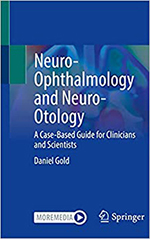

Neuro-ophthalmology and Neuro-otology: A Case Based Guide for Clinicians and Scientists
 

Search the Dan Gold Collection

Collection

Table of Contents

    1. Classes of eye movements
      1. Saccades
        1. Normal
        2. Abnormal
      2. Convergence
        1. Normal
        2. Abnormal
      3. Smooth pursuit
        1. Normal
        2. Abnormal
      4. Vestibulo-ocular reflex and head impulse testing
        1. Normal
        2. Abnormal
      5. VOR suppression
        1. Normal
        2. Abnormal
      6. Assessing alignment
        1. Normal
        2. Abnormal
      7. Assessing range of eye movements/motility
        1. Normal
        2. Abnormal
      8. Optokinetic Testing
        1. Normal
        2. Abnormal
    2. Specific ocular motor syndromes (1)
      1. Cranial nerve palsies
        1. Third (Oculomotor)
          1. Cyclical
          2. Subnuclear
          3. Aberrant Regeneration
          4. Nuclear
        2. Fourth (Trochlear)
        3. Fifth (Trigeminal)
        4. Sixth (Abducens)
        5. Seventh (Facial)
        6. Eighth (Vestibulocochlear)
        7. Ninth (Glossopharyngeal)
        8. Tenth (Vagus)
        9. Eleventh (Accessory)
        10. Twelfth (Hypoglossal)
      2. Nuclear/Supranuclear palsies
        1. Internuclear ophthalmoplegia
        2. One and half syndrome
        3. Horizontal gaze palsy
        4. Vertical gaze palsy
        5. Skew deviation
        6. Upgaze palsy
        7. Downgaze palsy
        8. Lateropulsion
      3. Ocular neuromyotonia
      4. Convergence spasm
      5. Convergence insufficiency
      6. Divergence insufficiency
    3. Other ocular motor syndromes by location
      1. Medulla
      2. Pons
      3. Mesencephalon
      4. Dorsal midbrain syndrome
      5. Cerebellar pathology


    1. Nystagmus and disorders of ocular stability
      1. Pendular nystagmus (binocular & monocular)
        1. Oculopalatal myoclonus
      2. Congenital vs acquired nystagmus
      3. Jerk nystagmus
        1. Downbeat nystagmus
        2. Upbeat nystagmus
        3. Rebound nystagmus
        4. Periodic alternating nystagmus
        5. Convergence retraction nystagmus
        6. Rotary (torsional) nystagmus
        7. Abducting nystagmus
        8. Latent nystagmus
        9. Vestibular nystagmus
          1. Acute vestibular syndrome
        10. End-gaze nystagmus
        11. Gaze-evoked nystagmus
        12. Bruns nystagmus
      4. Ocular oscillations
        1. Superior oblique myokymia
        2. Square wave jerks
        3. Opsoclonus
        4. Flutter
    2. Vestibular Examination
      1. Positional Testing
        1. Peripheral – Benign Paroxysmal Positional Vertigo (BPPV)
          1. Posterior Canal
            1. Diagnosis
            2. Treatment
          2. Horizontal Canal
            1. Diagnosis
            2. Treatment
          3. Anterior Canal
            1. Diagnosis
            2. Treatment
        2. Central positional nystagmus
      2. Removal of fixation, vibration and head-shaking
        1. Normal
        2. Abnormal
      3. Dynamic visual acuity
      4. Hyperventilation
        1. Normal
        2. Abnormal
      5. Pressure testing (e.g., superior canal dehiscence syndrome)
        1. Normal
        2. Abnormal
      6. Auditory testing
        1. Rinne and Weber
        2. Audiometry
        3. Flowsheet for Hearing Loss
      7. Vestibular lab testing
        1. ENG, VNG, VOG
        2. Video Head Impulse Testing
        3. Rotary Chair
        4. Calorics
        5. Vestibular Evoked Myogenic Potentials (VEMPs)


    1. Other Neuro-Ophthalmology
      1. Afferent Disorders
      2. Duane’s Syndrome
      3. Horner’s Syndrome
      4. Myasthenia gravis
      5. Miller Fisher syndrome
      6. Oculogyric crisis
      7. Optic Nerve Disease
      8. Tonic Pupil


    1. Lectures
      1. Central Vestibular Disorders & Ocular Motor Lecture Series
        1. Lecture #1: (8/8/2020) Vestibular Anatomy & Physiology, by Dr. Nicholas Hac
        2. Lecture #2: (9/5/2020) Ocular Motor Anatomy & Physiology, by Dr. Olwen Murphy
        3. Lecture #3: (10/3/2020) The Bedside Examination of the Ocular Motor & Vestibular Systems (60 minutes), by Dr. Dan Gold
          Lecture #3: The Bedside Examination of the Ocular Motor & Vestibular Systems (30 minutes, including virtual exam pearls), by Dr. Dan Gold

        4. Lecture #4: (10/31/2020) The Vestibulocerebellum (Is my patient’s dizziness or imbalance due to a cerebellar disorder?), by Dr. Dan Gold
        5. Lecture #5: (12/5/2020) The Acute Vestibular Syndrome and the HINTS Exam, by Dr. Dan Gold
        6. Lecture #6: (1/16/2021) Pontine and midbrain disorders by Dr. Scott Grossman
        7. Lecture #7: (3/13/2021) Strabismus & Skew Deviation, by Dr. Dan Gold
        8. Lecture #8: (4/24/2021) Vestibular Migraine, by Dr. Woo Choi
        9. Lecture #9: (5/8/2021) Cerebral Vestibular Disorders by Dr. Tony Brune


    1. Summary and review documents


    1. Figures


  1. Contributors
    1. Anthony Brune, DO
    2. John Carey, MD
    3. Woo Choi, MD
    4. Amir Kheradmand, MD
    5. Nathan Kung, MD
    6. Marco Mandala, MD, PhD
    7. Laura Morris, PT
    8. Allison Nogi, DPT
    9. Daniele Nuti, MD
    10. Stephen Reich, MD
    11. Michael Schubert, PT, PhD
    12. Veerah Shah, MD, PhD
    13. Ari Shemesh, MD
    14. Greg van Stavern, MD
    15. Roksolyana Tourkevich, MD
    16. David Zee, MD

Browse the Gold collection alphabetically by title

Textbook Supplement

Dr. Gold has a new book, Neuro-ophthalmolgy and Neuro-otology: A Case Based Guide for Clinicians and Scientists

Videos and electronic supplemental material from from Neuro-Ophthalmology and Neuro-Otology Textbook

Chapter 1

Chapter 2

Chapter 3

Chapter 4

Chapter 5

Chapter 6

Chapter 7

Career

Daniel R. Gold, DODan R. Gold, DO
Departments of Neurology, Ophthalmology,
Neurosurgery, Otolaryngology – Head & Neck Surgery, Emergency Medicine
The Johns Hopkins School of Medicine

2018 Best Consulting Physician, The Johns Hopkins Hospital
Johns Hopkins Miller Coulson Academy of Clinical Excellence

Catalog

Daniel Gold, DO

Associate Professor of Neurology, Ophthalmology, Neurosurgery, Otolaryngology – Head & Neck Surgery, Emergency Medicine, and Medicine The Johns Hopkins School of Medicine